Friday, July 28, 2023

A Summer Rerun: Police Reform—Part II: Training and Testing

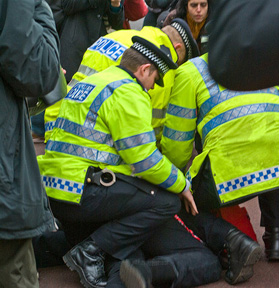
Police in the United States killed over 1,000 people in 2016. More than any industrialized country in the world. The need for police reform has never been more needed than today.

Hit the Brakes! An allegory

A 16-year-old tugs at his dad’s sleeve and begs to be taught to drive the car. Dad believes it is time, so promptly shows his son how to start the car, put it in gear, hit the brakes, etc.  He even takes his son to a nearby parking lot and lets the youngster drive around the empty lot.  After they get back home, dad jumps out of the car and turns to his son.

“Okay, boy, you are ready to drive. Go take it for a spin.”

As you might expect, the son promptly goes out and gets into a horrific traffic accident. For although dad taught him how to physically drive the car, he didn’t teach such concepts as who has the right-of-way, how to merge into traffic, what the various traffic signs represent and more.

The boy knew how to drive a car, but he didn’t know how to drive with other people around him.

From teenage driver to armed police

This is the same scenario that plays out with police in the United States as it relates to guns. They are taught to use a gun, allowed some basic target practice and given a few rules to obey, then get handed a weapon and sent out into the world. They have no experience in having a gun while other people are wandering around them. They have no knowledge about when and when not to utilize said gun.

In fact, if anything, they are encouraged to turn to using the gun any time they encounter trouble.

• This is why we see cops shoot a man who has been pulled over for missing a front license plate .  


•When an unarmed teenager flashes his car lights at an officer 

• Or if someone who the policeman has asked to see his license reaches into his truck to get it.

Watch your temper

When you watch a football game, look at the referee on the sideline. He's being constantly yelled at by fans or coaches, some standing right beside him. Typically, he does not respond at all as he's trained not to react. That's what we need with today's police.

A large number of police in this country do not have the temperament to wield a gun. They are often ex-high school football jocks who got all sorts of respect while in school, but now are shocked and angry when they don't automatically get that same respect today while on the force.

This is why today we see a large number of unarmed people shot and killed by police:

• Father is dragging son away from cop who then shoots the unarmed young man.


• Policeman kills an unarmed teenager who is jumping on cars.


• Police officers shoot naked man wielding a stick.

The European Example


In contrast, in Europe the police typically disarm people without shooting or killing them:


• Four Swedish policemen vacationing in New York City break up a violent fight without harming anyone.

• German police use broom to disarm man wielding a sword.

In fact, the police in other western countries seldom fire their weapons at all and killing of civilians is almost unheard of in Europe. For example, in 24 years police in Wales and England killed 55 civilians, while in 24 DAYS in 2015 U.S. police killed 59 civilians.

The difference: Training

The reason for this disparity of outcomes is training and mentality.  

To become a police officer in any of the other western industrial nations (Europe, Canada, Australia, New Zealand) it requires from two to three years to get certified to join the force. For example, in the UK it takes a minimum of two years of training to become a police officer.  In Northern Ireland, the training requires those two years plus candidates must complete a 25 hour online course before that training even begins. In Norway, police must earn a degree from a three-year college before becoming officers.

Likewise, In Germany the training and education last three years, and it includes training in using a weapon—stressing NOT TO SHOOT.  A quote from this article explains this concept: “In every head of every policeman, there is the aim not to shoot,” says Col. Uwe Thieme, the four-star senior police director at the state’s office for education, training, and human resources.

Meanwhile in the U.S. the average amount of training is 15 weeks. Each city can be different, for example, Sacremento requires 23 weeks, while in North Carolina it’s 15 weeks. It actually requires more training to become a barber or hair dresser than to become a policeman in the U.S.  The training for cosmetologists ranges from 25 to 40 weeks.

Another difference: Attitude

Besides training, the other major factor for why police in the U.S. use their weapons more than other industrialized police forces, is due to mentality and attitude. By this I mean here in the U.S. police are trained to think that the best alternative in a dangerous situation is to use deadly force.

As mentioned above, police are given training in how to use a weapon and practice using it. Some get up to 60 hours of training like this. Often this training includes a computer simulation, a form of a gauntlet scenario. They must wander down a street filled with miscreants and a few innocent bystanders. The police must wisely shoot the bad guys but not the innocent civilians.

Yes, this training can help a person to learn to respond quickly to a situation. And admittedly, police are often in situations where they must make split-second decisions. However, this type of training also begins to plant a seed in the officers head that whenever he walks down the street, he’s in a battle zone. That just around the corner is some evil guy waiting to shoot him. 

As noted above, this is different overseas. Sure, they are taught how and when to use a weapon, but more importantly, their training stresses how to avoid that situation ever happening. They realize that once you get in your head that you must react a certain way in stressful situations (pull your gun, shoot the evil guy) you are likely to fall back on that instead of trying some alternative.

How to correct the problem

The United States must change how police officers are trained. As noted above, too often police departments rely on the easiest and cheapest way to train officers: they require less time for training.  The best way to have a more efficient and less violent police force is to implement this:

• Each state must have a standard for training of police officers to be licensed within the state. It cannot be left up to individual cities/counties. In other words, the training for a police officer in Austin would be the same as one in Dallas.
• Training would be for a minimum of two years at a state sanctioned academy. At least 1/4th of the training should be actual fieldwork. A large portion of this should include training to interact with the community—without the use of a weapon.

• Increase training in self-defense without use of a weapon.

• Increase training in how to diffuse a dangerous situation.

Step 2: Mandatory test to use a weapon

In the movie “Blade Runner” people were given the “Voight-Kampff test”  to see if they were human or android. In one scene, a person taking the test gets so angry at the question, he kills the man giving the test. Yes, he was an android. (for fun, take the test here to see if you are a replicant).

Although we don’t need to test people to see if they are human or not, we do need to test a person who wants to become a police officer to determine suitability for carrying a weapon. So besides improving training of police officers we need to ensure that the person we allow to join a police department isn’t a hothead who will use a weapon on someone else because his wife yelled at him before he left home that day.

The test would be some form of psychological evaluation to determine attitude as well as likelihood that a person might be unsuitable to carry a weapon.

Failing this test should not necessarily keep a person from joining the police force. It should only prevent the person from carrying a weapon. If the person passed the above academy but failed this test he/she could still be employed.

With this in mind, half of today's police force should be disarmed. Not just because they are not mentally stable enough to use it wisely, but also because the majority of encounters with civilians does not require a weapon. If the person wanted to carry a weapon, the person could be eligible for a retest after six months if he/she performed without incident in the field. Also, although current police officers should be "grandfathered in" so they don't need to go through the new training standards--they should be required to pass the psychological assessment in order to continue to carry a gun. If they don't pass they are not dismissed, just reassigned to a non-weapon division.

Conclusion

In many cases in which police shoot civilians, those police officers state that they "feared for their lives." Since a large percentage of those shot are unarmed, it means that police training is embedding in the recruit's minds that they will be constantly under attack; that they are going out into a war zone; every encounter could be dangerous. They are taught to be fearful. On the other hand, the training in other countries teaches recruits how to be prepared for dangerous situations, but also how to face common day-to-day encounters that are not dangerous and how to better interact with the civilian population.

What all of this boils down to is that police departments need to change the structure of how they carry out some of their duties. In Police Reform—Part 1 I talked about removing traffic duties from the police department and giving them to an unarmed city department. Part 3 of police reform will include suggestions on how a police department should be structured. For example, half of the department should be unarmed; there should be a rapid-deployment division that includes armed officers (not a SWAT team), etc. Current police forces have detectives, swat teams, police in uniform and other groups/divisions. Maybe there should be a different way to organize police forces.


Well, I had Part I, so it makes sense that sooner or later I'd include Part II.  This article originally was written as a HUB page.  However, they removed one of my other pages so to ensure this article is still floating around the internet, I thought I'd include it here at The Thurber Brigade. I'll get back to The War Between Men and Women (relationships) real soon. Really.


Additional note for this rerun.

There are people out there who think (even after reading this essay and its links) that there are just a few "bad apples" out there. No, there are a ton of bad apples out there. I'd predict a majority. Just recently we had a cop unleash a dog on a man who had already surrendered. A cop who beat up a man who gave him the finger after seeing said cop use force on a woman. These cases just keep happening. If we're lucky, they are filmed by a civilian so that the public learns about them. Sadly, most go unnoticed unless there is a leak from an employee disgusted by the act. It's not going to change until we have major reform of the police. All of them. The above blog lists a few simple things to do, but there's a lot more that needs to be done. With luck, maybe enough people will be angry enough to bring this change about. I'm not holding my breath.

(This essay originally ran in The Brigade in July 2019 and as a HUB story in 2015)


Friday, June 30, 2023

The Swift Years

In colonial times, a popular way to spread the news and your opinion was through pamphlets. One of the most famous American pamphleteers was Thomas Paine and his renowned “Common Sense” pamphlets. He was instrumental in informing the public about why they should resist the British and embrace a new way. That radical liberal idea was that they could be a country not ruled by a god-ordained king, but by free thinking men.
In the 80s I decided to embrace this form of writing. I started publishing “Swift's Eye.” Named after Jonathan Swift, an English satirist who probably did a few pamphlets himself besides writing clever books like “Gulliver's Travels.”
So while I scribbled witty satirical short stories and labored on numerous blockbuster books, I took time to pen some clever and biting political rhetoric and put them in a handy, user-friendly form. A paper pamphlet.
As a side note, I thought I was really clever because part of their charm was that I tried different folding techniques for the pamphlet. Most were fold in half, then in half again, but I once tried a tri-fold, often set a page up that required it be completely unfolded and often ran typed across folds. Okay, it might not have been that clever.
I created them on a typewriter so I always had to have a mock up in order to know how far to type and whether I needed to turn the page upside down to type the next page (because of the fold). There were some pages I used what is called “press type” as you have to press it down with a special tool. It's a real slow process and you had to use something to make sure it was level. So this pamphlet was pretty labor intensive. Nowadays it would be so easy with the use of a computer, but back then about the only people with those were engineers, computer programmers and a few rich people.
Like the colonial time pamphleteers, Swift Eye was political. I mainly attacked Reagan, but often had something about the environment or other hot topics of the time. Of course, as a satirical short story writer, most of the time it was funny or humorous. My favorite one was the one that made fun of Reagan's wife penchant to turn to astrology for answers.
In total, I think I only had five to six issues of Swift’s Eye. I liked doing them, but because they were so labor intensive and I never thought they made as big of an impact as I desired, I lost interest in the mode. Instead, I just hunkered down and put more energy in putting the same ideas and concepts in my short stories. Many of those got published and to keep them alive I included them on my web site so they’ll live on in the electronic world for years.

James Thurber would have approved of my pamphlets because not only were there clever articles and statements, but many interesting images. Maybe not as good as his cartoons, but still fun for the reader.  Yes, you guessed it. This blog not only acts as a way for me to put my pamphlets in the electronic universe, but it’s also a way to look fondly back at the 80s. Ahhhh, the 80s.

Ahh, James Thurber


Friday, May 26, 2023

The Wilmington 10 Incident

During my time in the 82nd Airborne I had a number of wild adventures and experiences. However, one incident that I thought minor when it began, became a big learning experience. It involved a protest rally for The Wilmington 10.
A guy I was working with to try and bring about an enlisted person union (mentioned in a previous blog) asked me one time to go to this protest rally. At the time, I didn't know anything about The Wilmington 10. So, he filled me in.
I took this in 1976, not that long ago
They were these 10 high school kids (nine boys, one girl) who made the “mistake” of being outspoken advocates for civil rights while being black in North Carolina in 1971. Oh, the Klan didn't parade openly in the state anymore, but their racism and violence permeated the state nonetheless. 

Basically, what happened to these kids was that they got arrested for an arson of a local store. At the time of the arson they were in a meeting about how to train for civil rights advocacy. That didn’t matter as the prosecution got three people to accuse them. Turns out later we learned that one of the witnesses was given a mini bike to get him to testify. Plus, later all three recanted their testimony. That came much later after the 10 had served years of their 29-year sentence.
The protest I was going to take part in was in 1976 or 1977 when people were trying to get them freed. President Jimmy Carter was coming to Fayetteville where I was stationed. As my Army buddy Rick and the guy who got me involved (I think his name was Mike, but can't be sure) we’re driving to the protest, he told me he slightly felt bad about this because the reason Carter was coming to town was to attend a wedding of some relative. We needed to try to get attention to the cause though, so this seemed the best way.
The protest was pretty big and vocal. We had tons of signs and banners that were pre-made and we waved them vigorously. We were kept on the sidewalk across from the church by a number of police officers, but they didn’t have but a few barricades. They didn't really need more as we weren't unruly, just loud. 

As we stood there, one policeman walked brazenly down the line of protestors taking our pictures. No doubt to go into some file labeled “commie, pinko agitators” stuck in a file cabinet at HQ. 

One exciting thing about the protest was that I got to see Jimmy Carter's arm. He waved at us through an open window of the limo, apparently realizing we weren't dangerous enough to keep the bullet proof window up.

Another exciting thing was that I spotted a lieutenant from my company hanging out behind the crowd. He was the only black officer in the company (maybe battalion) so I guessed the Army thought he might be better able to fit in. I nudged my buddy Rick and pointed out the LT, so we turned, smiled broadly, and waved at him shouting “Hi LT!” He looked sheepishly at us, waved faintly, then tried to move away. Yeah, we had a good laugh.

This was one of the big lessons I got from this though. I had suspected the Army was spying on me because of my GI right’s advocacy and this proved it. It didn't stop me from doing it, but it did make me a little more nervous.
Rick and Jay at Wilmington 10 protest
The protest didn’t get Jimmy Carter to do anything about The Wilmington 10, but it did give the cause publicity. We made the front page of the paper the next day. Lo and behold, Rick and I had our picture on the story. I thought it was cool, but doubt the Army felt the same way.


I will say this positive thing about the Army, they didn't overreact. I think they (or their lawyers) knew that I was protected by the First Amendment as the protest was off base and on my own time and of course, I wore “civies.”

This was the other thing the incident taught me: the media and the police work together. Oh, I doubt it's all the time and a lot has changed from the 70s, but I'm sure it still happens from time to time. You see, there were no other photographers at the protest who could have taken the picture that was in the paper. It was straight on and really close.

Although we didn’t get the result we wanted from the protest I'm sure the publicity helped emboldened others to also take on the cause. Plus, several big organizations eventually got involved (we can't take credit for that) like the ACLU and Amnesty International. Eventually, the kids were released from prison early. For some of them, it took up to 10 years, so it's sad they paid such a big price, even though innocent. After much effort and time, they were eventually pardoned. 

I still often think about that minor incident. Sadly, I don't think the US has changed that much. I mean, just look at all the people gunned down by police for the crime of being black in a racist nation. Yeah, I've blogged about that, a lot, and probably will continue. Now you know about my first experience with government secrecy (the LT spying) and why although I support the media and see them as the Fourth Estate who play an important part in helping us keep an eye on our government, I also know to be cautious about their intentions. 


Ahhh, James Thurber


Sunday, April 9, 2023

The Story of Easter: A Thurber Brigade Rerun

Around 300 CE the Cardinal ran up to the Pope while in the most agitated state.  The Pope held up his hand in a calming manner to placate the worried man.

“Calm thyself Cardinal.”

“We have a crisis your excellency!” the Cardinal exclaimed.

“What crisis?”

“The people are dancing around naked and drinking heavily all in the name of Eostre!”

“Well, we can’t have that.  I have a plan though.  Go gather the people around and I will make a declaration.”

So, the Cardinal rushed off and after getting the people clothed and somewhat sober, convinced them to go and hear what the Pope wanted to tell them. 

“People there is a new holiday you should celebrate.  It is one that commemorates the death and resurrection of Jesus.  This holiday will be heretofore known as Easter!” the Pope exclaimed.

The people mumbled amongst themselves and looked questioningly at the Pope.  “Easter?” That sounds suspiciously like our favorite time of the year when we celebrate Eostre,” one man said.

“Um, no, no, it’s not related to Eostre at all,” the Pope assured him.

Monty Python would celebrate Eostre
“It seems strange to celebrate someone’s death,” another peasant said to the Pope.  “I mean, it sounds rather bloody from the description your priests have told us in the past.”

“Yeah, and that story they tell about Jesus sure sounds a lot like the story of Inanna and Horus,” anther person shouted.  “I mean, they were killed, went to the underworld and came back.”

“No, no, those stories are just myths. This story of Jesus is real. You can trust me,” the Pope said as convincingly as he could.

“We like Eostre though,” several others chimed in.  “We get to dance and drink, we paint eggs and carry around rabbits to celebrate the new spring and virility.”

“Well, you can still have eggs and rabbits,” the Pope said. 

“Can we dance and drink too?” a man at the back asked.

“Of course you can, although I think it best to keep your clothes on,” the Pope answered.

The people furrowed their brows and wrinkled their noses.  “We’re not sure about this holiday.”

“Oh, you’ll love it,” the Pope assured them. “You’ll have a great time.”

So the people decided to celebrate both holidays.  After all, the more holidays the better.  However, slowly but surely the Pope and his successors convinced them to just celebrate Easter. With time, he also got the people to calm down more and celebrate with less enthusiasm.

The church kept the eggs and rabbits, but got the people to dispense with the dancing and drinking. A small group of pagans didn’t like this turn of events and vowed to one day return the holiday to its more spirited nature. 

Slowly but surely the old Eostre followers have been stressing the eggs and rabbits.  So today you can actually find people telling stories of big rabbits hiding chocolate eggs. They sneakily got the church to offer sunrise services which celebrate an old solar celebration. Also, the pagans convinced the Pope to base the time of Easter on the phases of the moon.  They haven’t been able to bring back the wild dancing, but have had more luck with the drinking aspect with their Easter sales at liquor stores.

So whether you follow celebrations of Horus, Inanna, Eostre/Ostara or Easter we at The Thurber Brigade wish you a pleasant holiday.

We at The Thurber Brigade apologize if this story sounds a little like our annual Christmas story.  We can't help that a certain religion co-opted several Pagan celebrations to try and win over the people. We also apologize to the serious religious types for making fun of the Pope, religion, myths, etc.  We don't regret it, nor doubt the above story has some basis in reality, but we apologize as we want you to continue to enjoy whatever holiday you celebrate. Cheers.


Thursday, March 30, 2023

F#@% Thoughts and Prayers

Hey, GOP congresspeople, Fuck your thoughts and prayers. They are meaningless and most likely, not even heartfelt. Every time there is another mass shooting, that is the only thing presented by these folks (I wanted to use a harsher word) for those effected by the shooting.

On many occasions, I’ve blogged about mass shootings and gun violence. I’ve even pointed out that the 2nd Amendment was not designed to help gun ownership, but to help arm militias/slave patrols. In fact, it wasn’t until the 1970s that the idea that the 2nd was all about gun ownership took shape.

Before that time, the NRA was mainly a sporting organization (not a gun lobby) and supported gun control and the courts largely believed that guns could be highly regulated.

Who can forget how quickly politicians enacted regulations when one of the scariest events (to white people) in US history happened: The Black Panthers marched around a city with guns!

Yeah, didn’t take long to take those guns away. But that was in the 60s. It began to change in the 70s when the NRA realized they could make big bucks by lobbying for gun manufacturers. Sharing that loot with politicians quickly followed and of course, legislation to control weapons became impossible. Even if the majority of Americans supported regulation.

In the past, I’ve suggested some simple things to start curbing possible mass shootings.

Universal background checks. This should cover every single gun purchase.

Liability insurance for gun owners. Just imagine how much influence the insurance industry would exert for gun control after they began to pay out huge insurance claims after a shooting.

These are simple examples, but there are more that could happen. Other countries require mandatory training. Some include license requirements for every gun. Japan has an extensive psychiatric interview for prospective buyers.

None of these will happen though because the GOP is so completely owned by the gun lobby.

So, I’ve included numerous memes that you can share if you decide to encounter said politicians or even your gun nut Uncle Joe when he visits you during the holidays.

I wish the best to the people of Nashville who have had to experience our latest mass shooting and I’m sorry that we as a nation cannot get a small contingent of right-wing politicians to do what is needed.

Ahh, James Thurber

 The Thurber Brigade apologizes for yet another sidestep about a mass shooting. We seem to do this quite often, and it's because mass shootings happen so often.  There have been over 100 this year already and we're only three months into the year. The Brigade can't enact legislation, congress-folk don't listen to us or anybody (but the gun lobbies), so we're left with writing about it and hope that said politicians will begin to feel the disdain we all hold for them on this and maybe, maybe they'll do something for once.